
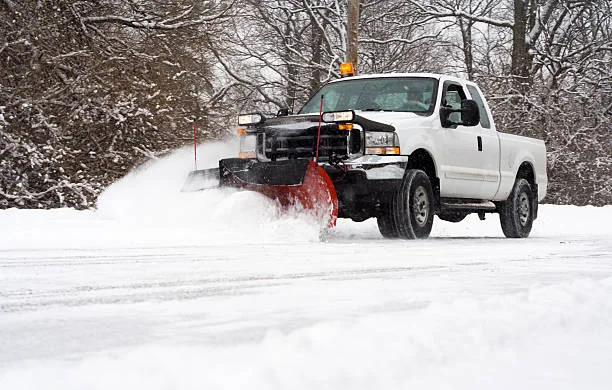
Every fall the same question comes up. Do you sign a seasonal snow contract or call someone when it snows? The answer depends on your property, your schedule and how much risk you want to carry. This guide covers the terms you will see in a snow removal contract around Milwaukee and the questions worth asking before you sign anything.
Seasonal contract or per push
A seasonal contract covers the whole winter for one agreed amount, no matter how many storms hit. You know your winter cost up front and you are on the route for every storm. A per push or per visit agreement charges each time the crew comes out. It can cost less in a light winter and more in a heavy one.
The bigger difference is priority. Seasonal customers are on the route first. Call in customers get worked in when there is time, which after a big storm can be a long wait. If you need to be cleared before work or before your business opens, a seasonal contract is the safer choice. Our seasonal contracts page covers how ours work.
Trigger depth
The trigger depth is how much snow has to fall before the crew comes out. Common triggers are one or two inches. A lower trigger means more visits and cleaner surfaces. A higher trigger means fewer visits. Make sure the contract states the trigger in writing and what happens with light snow that falls below it.
What gets cleared
A good contract lists every surface. Driveway, apron at the street, front walk, side walks, steps, the path to the back door, mailbox access and for businesses the lot, entrances and accessible routes. If it is not written down, do not assume it is included.
Ice and salt
Plowing and ice treatment are separate jobs. Ask whether walks get treated after plowing, what product is used and whether there is a charge per application. Salt works best on surfaces that have already been cleared. UW Madison salt guidance says about one coffee mug covers a 20 foot driveway or ten sidewalk squares, and sand works better below about 15 degrees (UW Madison salt guidance). More salt is not better. It kills grass along walks and wears out concrete.
City sidewalk rules
Cities set their own deadlines. In the City of Milwaukee, owners must clear sidewalks within 24 hours after snow stops, and snow cannot be pushed into the street (City of Milwaukee). Suburbs like Cudahy (City of Cudahy) and Glendale (City of Glendale) post their own rules. Ask your contractor which deadlines their route is built around.
Questions to ask before you sign
- What is the trigger depth, and is it written in the contract?
- Which surfaces are included, and which are extra?
- Is ice treatment included or billed per visit?
- How soon after a storm ends will my property be cleared?
- Where will snow be piled?
- Who do I call when something is missed?
- Are you licensed and insured, and can I see the certificate?
Protect the lawn before the first storm
Set markers along driveways, curbs and beds before the ground freezes so the plow knows where the edges are. Most lawn damage from snow removal happens on the first storm, before anyone can see where the grass ends.
We offer seasonal snow and ice removal across Milwaukee County and eastern Waukesha County. Call 262-400-2085 and we will walk your property and put every surface in writing.