
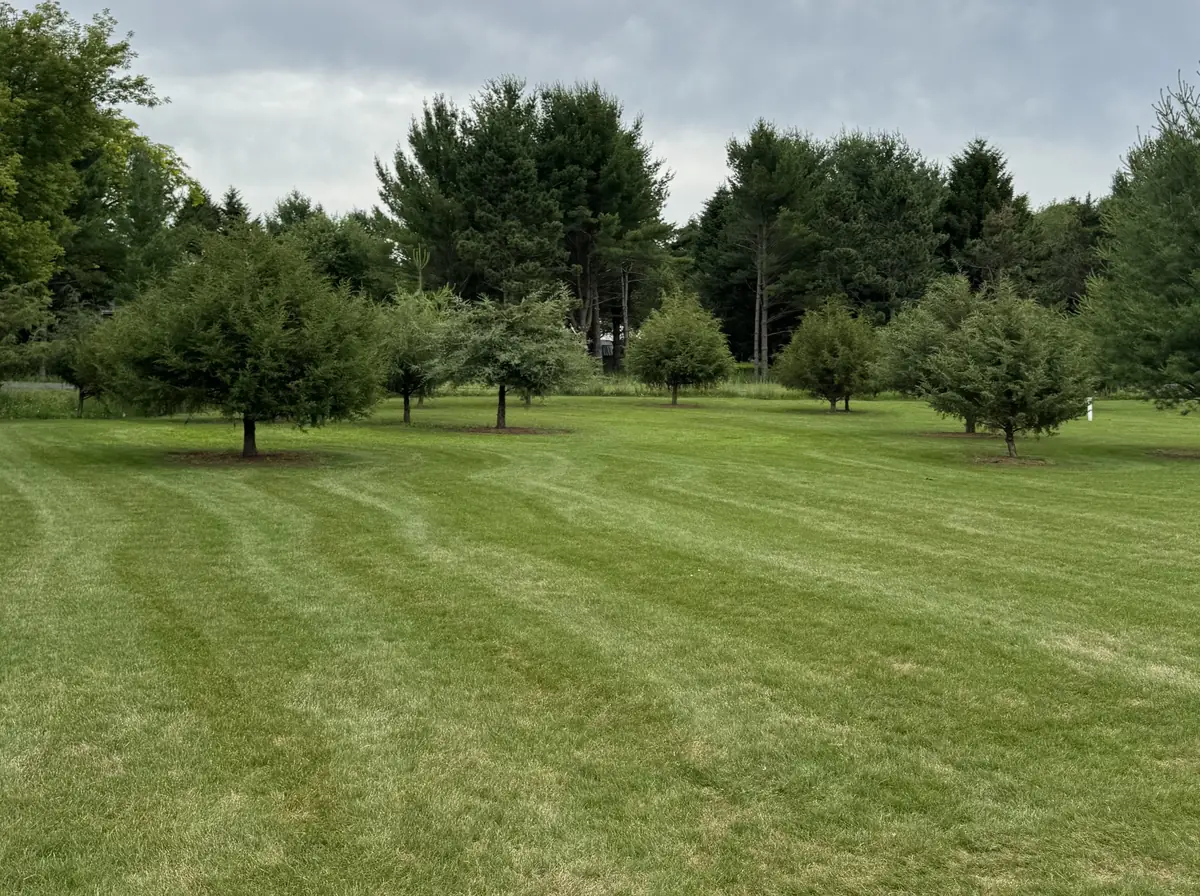
Most lawn advice online is written for a national audience. A lawn in Milwaukee lives through a short spring, a humid July, a long fall and a winter that freezes the ground for months. The timing that works in Georgia or California does not work here. This calendar is what we follow on the lawns we take care of across Milwaukee County and eastern Waukesha County.
March and early April
Stay off the lawn while it is soggy. Walking, raking or driving on wet spring soil compacts the clay that most Milwaukee area lawns sit on, and compaction is hard to undo. Once the ground firms up, a spring cleanup clears leaves, sticks and debris that sat under the snow, cuts back perennials and edges the beds.
This is also the time to get your mower ready. Sharpen the blade, change the oil and check the deck height. A dull blade tears grass instead of cutting it, and torn tips turn brown and invite disease.
Late April and May
Mowing season usually starts in late April, depending on how warm the spring runs. UW Madison Extension recommends keeping a home lawn around three inches tall and never removing more than one third of the blade at once (UW Madison Extension). In May that can mean mowing more than once a week. Do not scalp the lawn on the first cut. Short spring grass lets crabgrass seed reach the sunlight it needs to sprout.
Leave the clippings on the lawn. They break down quickly, return nitrogen to the soil and do not cause thatch. You only need to bag when the grass got away from you after a stretch of rain.
June and July
Growth slows as summer heat arrives. Keep the mower high and stretch mowing to every week or every other week based on how fast the grass grows, not the calendar. A lawn that goes tan in a dry July is usually dormant, not dead. Cool season grass in Wisconsin often greens back up when rain and cooler nights return.
If you water, water deeply and less often. A long soak once or twice a week trains roots to grow down. Light daily watering keeps roots shallow and makes the lawn more fragile.
Late August and September
This is the most important stretch of the year. UW Madison Extension calls late August to early September the ideal time to seed and renovate Wisconsin lawns (UW Madison Extension). Soil is still warm, nights are cooler and weeds are slowing down. If your lawn is thin, compacted or patchy, this is the window for core aeration and overseeding.
Labor Day weekend is also the prime time to fertilize, according to UW Madison Extension (UW Madison Extension). Fall feeding builds roots that carry the lawn through winter and into next spring. Wisconsin restricts phosphorus in lawn fertilizer unless you are starting a new lawn or a soil test shows a need (Wisconsin DATCP), so a soil test is worth doing before you add it.
October and November
Keep mowing as long as the grass is growing. Leaves need to come off the lawn as they fall. A thick, wet mat of leaves left over winter smothers grass and invites snow mold. One or two leaf removal passes during the fall is easier on the lawn than one giant cleanup at the end.
Most Milwaukee area cities run curbside leaf collection in the fall, each with its own dates and rules, like the City of Milwaukee (City of Milwaukee) and Wauwatosa (City of Wauwatosa). Check your city before piling leaves at the curb. A fall cleanup cuts back beds, clears the lawn and leaves the yard ready for snow.
December through February
Winter is about protecting what you have. Mark the edges of driveways and walks so plows and snow blowers stay off the lawn. Go easy on salt along walks and beds. UW Madison salt guidance says about one coffee mug of salt covers a 20 foot driveway or ten sidewalk squares (UW Madison salt guidance). Salt piled along the edge of the lawn kills the grass there by spring.
The short version
- Stay off wet spring soil and clean up once it firms up.
- Mow around three inches and never take more than a third of the blade.
- Leave clippings on the lawn.
- Aerate, overseed and fertilize in late August and September.
- Get leaves off the lawn through the fall, not all at once at the end.
- Use less salt than you think and keep plows off the grass.
If you would rather hand the calendar to someone else, that is what our lawn care program and weekly mowing are for. Call 262-400-2085 for a free estimate.