
Paver patios built for Wisconsin winters.
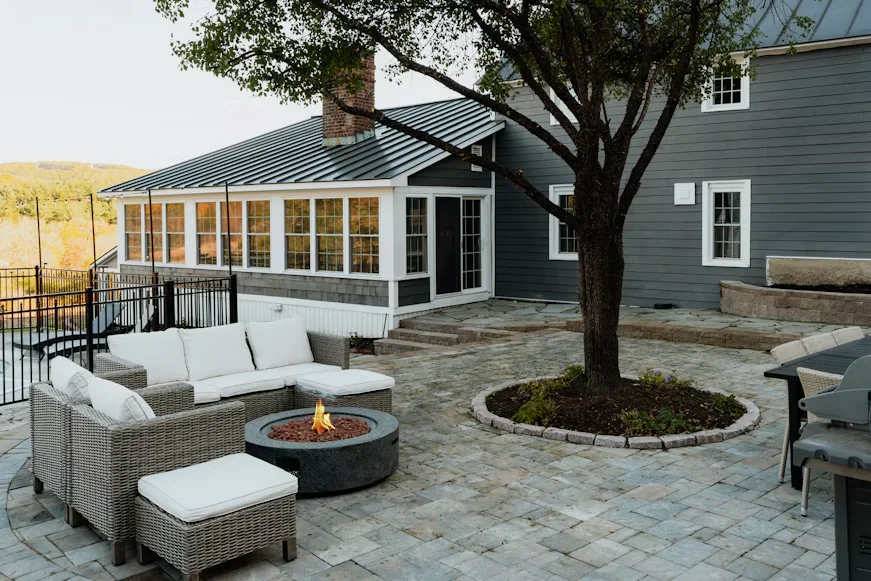
Concrete, brick and natural stone paver patios laid on a compacted gravel base, pitched to drain and edged so they stay flat through freeze and thaw.
About This Service
A patio is only as good as what is under it.
Most patios that heave or sink in Milwaukee were set on too little base. Clay soil holds water, the water freezes, and the pavers move with it.
We dig out to firm soil, build up and compact a gravel base in lifts, set a level bedding layer and lock the edges. Then the pavers go down, get compacted and get joint sand swept in.
What You Get
No shortcuts. No fine print.
Here is exactly what is included in every patio project.
Layout and grade check
We mark the patio, check where water runs and set the pitch away from your house.
Full excavation
Sod and soft soil come out so the base sits on firm ground.
Compacted gravel base
Base stone laid and compacted in lifts, not dumped and raked flat.
Paver choice
Concrete, brick or natural stone, picked to match your house and how you use the space.
Edge restraint
Edging set along the open sides so the field cannot spread.
Joint sand and cleanup
Joints filled and compacted, extra soil hauled away, lawn edges repaired.
Patio Guide
Planning a patio you will actually use.
Size it for furniture
Measure the table and chairs you want and add walking room around them. A patio that fits the furniture with no space to pull chairs out ends up feeling cramped.
Choose material for your house
Concrete pavers come in the most shapes and colors, clay brick fits older homes and natural stone gives a one of a kind look. All three last when the base is right.
How long does a paver patio last?
Pavers or poured concrete?
When can you build a patio?
Do I need a permit for a patio?
Can pavers go over my old concrete patio?
Do pavers need sealing?
Hardscaping
More hardscaping work.
Also Available
Other services we offer.
Ready for a patio you will actually use?
Free estimate with a layout sized to your yard. No commitment required.
262-400-2085Every day, 5am to 9pm
info@gusslawncare.comGet a Free Quote
Fill out the form below and we will get back to you the same day.